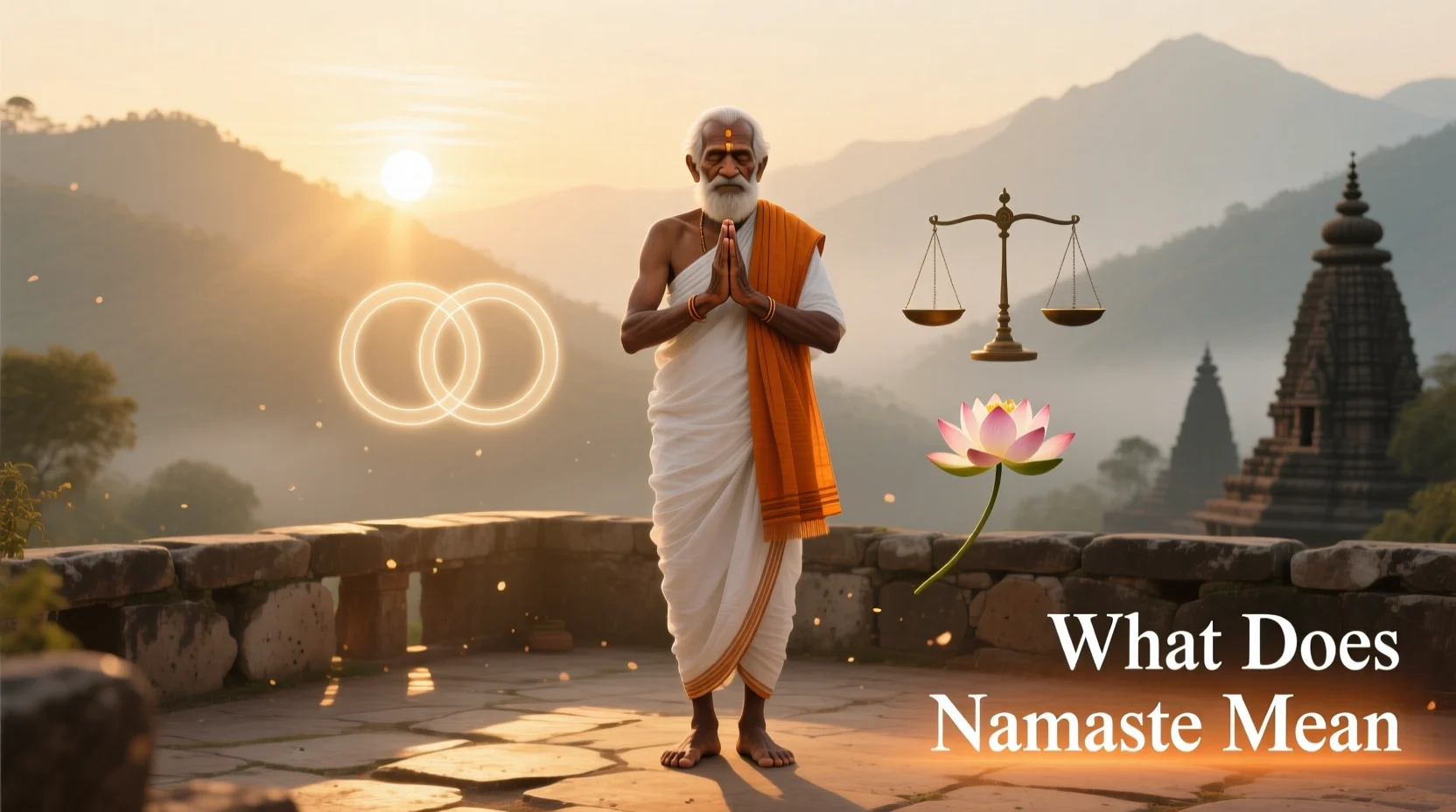
The word “Namaste” is more than just a polite greeting it’s a beautiful expression of respect, unity, and spirituality that transcends languages and borders. Whether you’ve heard it in yoga classes, seen it on social media, or experienced it in Indian culture, many people wonder: What does Namaste truly mean?
Derived from Sanskrit, “Namaste” literally means “I bow to you.” But beyond its translation, it reflects a deep acknowledgment of the divine presence within another person — a gesture of humility and connectedness.
This greeting has gained worldwide recognition, especially through yoga and mindfulness communities, yet its origins remain deeply rooted in ancient Indian philosophy.
In this guide, we’ll explore Namaste’s meaning, origin, cultural usage, misconceptions, and how it’s respectfully used today in both traditional and modern contexts.
🙏 What Does Namaste Mean? Definitions & Deep Symbolism

“Namaste” (नमस्ते) is derived from two Sanskrit words — ‘Namah’ (to bow or honor) and ‘Te’ (to you) — translating directly to “I bow to you.” However, the phrase embodies a far richer meaning than a simple salutation.
In Hindu, Buddhist, and yogic traditions, Namaste represents recognition of the divine spark in each individual — often expressed as “The divine in me honors the divine in you.”
When spoken with the accompanying gesture of folded hands (known as Anjali Mudra), it becomes a powerful symbol of respect, peace, and spiritual equality.
In modern contexts, Namaste serves both as a greeting and farewell — much like “hello” or “goodbye” — but always with a tone of gratitude and reverence.
💡 Quick Insight: Namaste is not just a word — it’s an energetic connection between souls.
🕉️ Origins & History of Namaste

Namaste’s roots trace back thousands of years to ancient Vedic culture in India. Early texts like the Rig Veda and Upanishads used the word as a sacred salutation symbolizing humility before the divine.
Historically, bowing gestures were not merely social customs but acts of spiritual reverence acknowledging the divine consciousness present in all beings.
As Hinduism, Buddhism, and Jainism evolved, Namaste became ingrained in daily rituals, prayer, and interpersonal interaction. The gesture Anjali Mudra also appears in temple worship, meditation, and classical dance forms like Bharatanatyam.
Over centuries, Namaste transcended religious boundaries and became a cultural hallmark of South Asia, extending to Nepal, Sri Lanka, and beyond. With globalization and yoga’s rise, this sacred word entered Western culture as a universal sign of peace and mindfulness.
🌍 Usage in Different Contexts From Culture to Social Media

Namaste has gracefully adapted across cultures and digital platforms, carrying different nuances based on context.
1. Traditional & Spiritual Settings
In India, Namaste is used as a daily greeting and during prayer, ceremonies, and temple rituals. It conveys respect to elders, teachers, and spiritual figures.
2. Yoga & Mindfulness
In yoga studios worldwide, instructors use Namaste at the end of class to express gratitude and mutual respect. It symbolizes a shared journey of awareness.
3. Social Media & Pop Culture
On platforms like Instagram, TikTok, and YouTube, Namaste often appears in captions or emojis 🙏, representing peace, love, or positivity — though sometimes detached from its cultural roots.
4. Professional or Global Communication
During global health crises (like COVID-19), Namaste gained attention as a contactless greeting, replacing handshakes while maintaining courtesy.
❌ Common Misunderstandings & Clarifications

Despite its widespread use, Namaste is often misunderstood or misapplied in the West. Some common misconceptions include:
It’s not just “Hello” — Namaste is a sacred word of respect, not casual slang.
It’s not exclusive to yoga — It’s a living part of Indian culture, used daily by millions.
Gesture + Word = Complete Meaning — Saying “Namaste” without the gesture loses its depth.
Cultural Sensitivity Matters — Using Namaste decoratively (on merchandise or memes) without awareness may appear disrespectful.
Understanding its true meaning ensures we honor its spiritual and cultural roots, rather than dilute them.
💬 Alternatives & Synonyms of Namaste

Depending on region or faith, other respectful greetings carry similar sentiments:
| Language | Greeting | Meaning |
|---|---|---|
| Hindi | Pranam | Deep bow of respect |
| Sanskrit | Namaskar | Reverent salutation |
| English | Peace be with you | Spiritual goodwill |
| Japanese | Gassho | Bow of gratitude |
| Thai | Wai | Gesture of respect |
These greetings share a universal message of reverence and connection, proving that despite linguistic differences, human respect remains a shared value.
Frequently Asked Questions (FAQ)
1. What does Namaste mean literally?
It means “I bow to you” in Sanskrit — a gesture of respect and acknowledgment of divinity within others.
2. Is Namaste religious or cultural?
It’s both — originating in Hinduism but now embraced across religions and cultures.
3. Why do people say Namaste in yoga?
Yoga teachers use it to express gratitude and respect for shared learning and energy.
4. Is it okay for non-Indians to say Namaste?
Yes, if done respectfully and with understanding of its meaning.
5. How do you respond to Namaste?
Simply return the gesture and say “Namaste” back with sincerity.
6. What’s the difference between Namaste and Namaskar?
Namaskar is a more formal or extended version of Namaste, often used for elders or during rituals.
7. What does the Namaste emoji 🙏 mean?
It represents gratitude, prayer, or a polite thank-you — commonly used on social media.
Image Prompt:
A clean infographic of FAQ answers with icons representing yoga, prayer hands, peace, and gratitude.
🌺 Conclusion:
Namaste is not just a word — it’s a bridge between souls, a gesture that embodies humility, peace, and respect. Its Sanskrit roots and spiritual symbolism remind us that all beings are interconnected through divine energy.
From ancient temples to modern yoga studios, and from heartfelt greetings to digital conversations, Namaste continues to inspire unity across cultures.
As global citizens, understanding and using Namaste mindfully and respectfully allows us to honor its cultural origins while embracing its universal message:
“The light in me honors the light in you.”

Vince is the creative mind behind primejoke.com, bringing laughter, clever wordplay, and fresh humor to every post. With a love for witty jokes, clever captions, and puns that pack a punch, Vince helps readers add a smile to their day one scroll at a time. Whether it's meme-worthy moments or pun-perfect punchlines, Vince keeps it light, fun, and totally shareable.
- Vince

- Vince

- Vince

- Vince

- Vince

- Vince

- Vince

- Vince

- Vince

- Vince